- All Works
- Selected
2026
1,311 Diamonds
Sculptural sound installation with silkscreen in marble dust on indigo-dyed nettle and jute, 3D-printed marble dust with electronics, lenticular pigment prints on aluminum, glass neon with activated carbon dioxide.
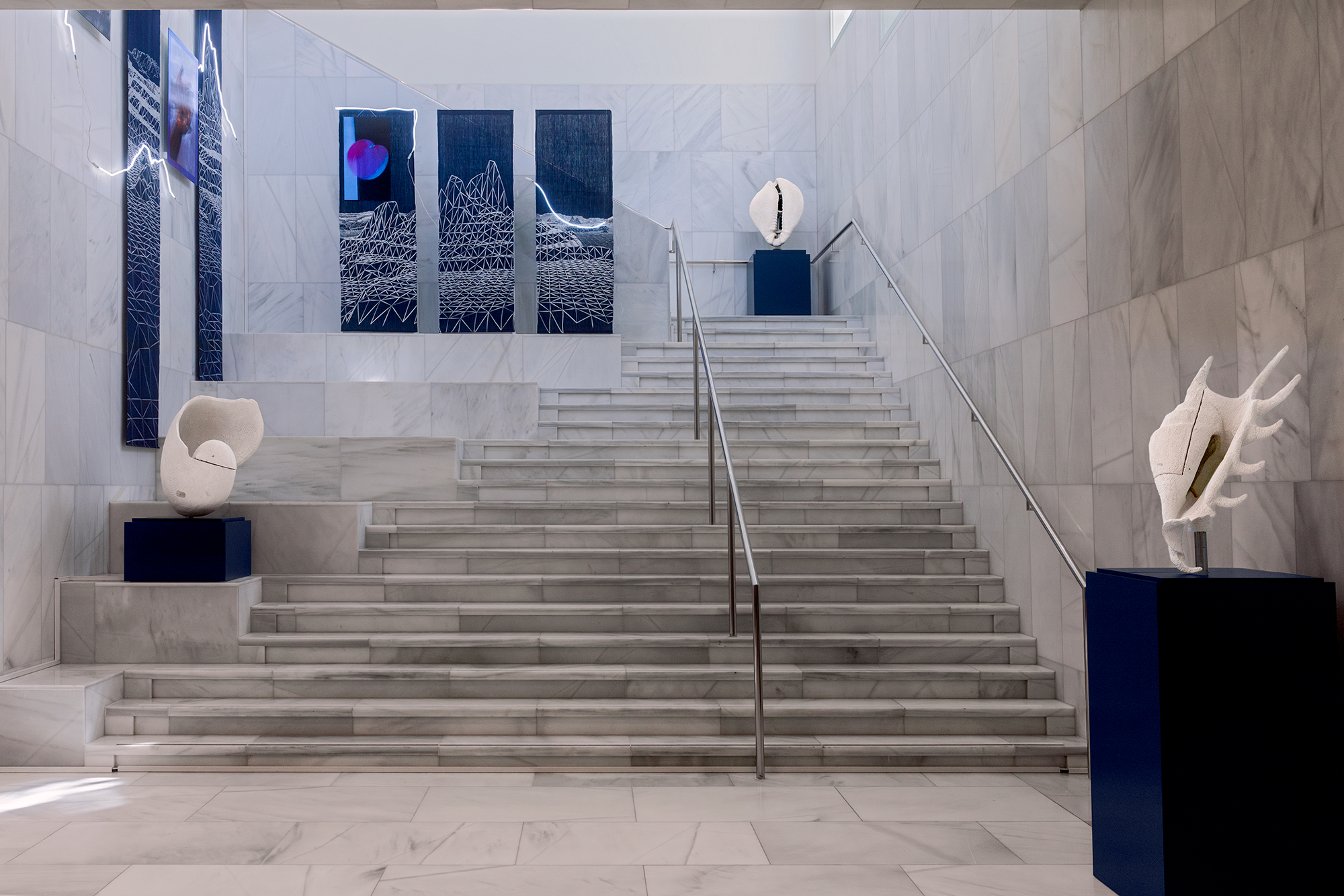
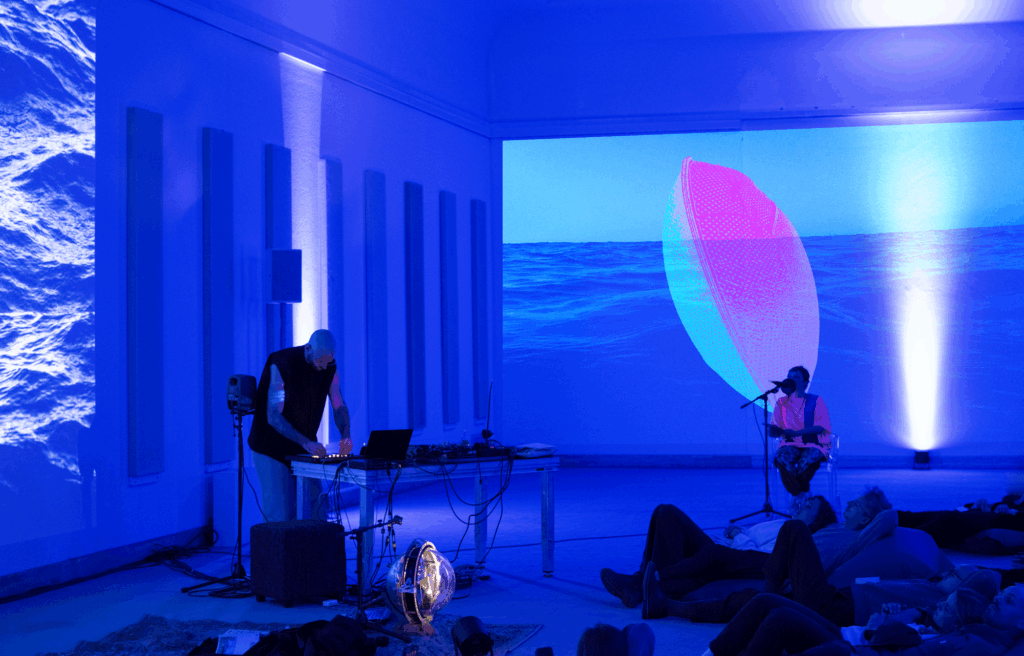
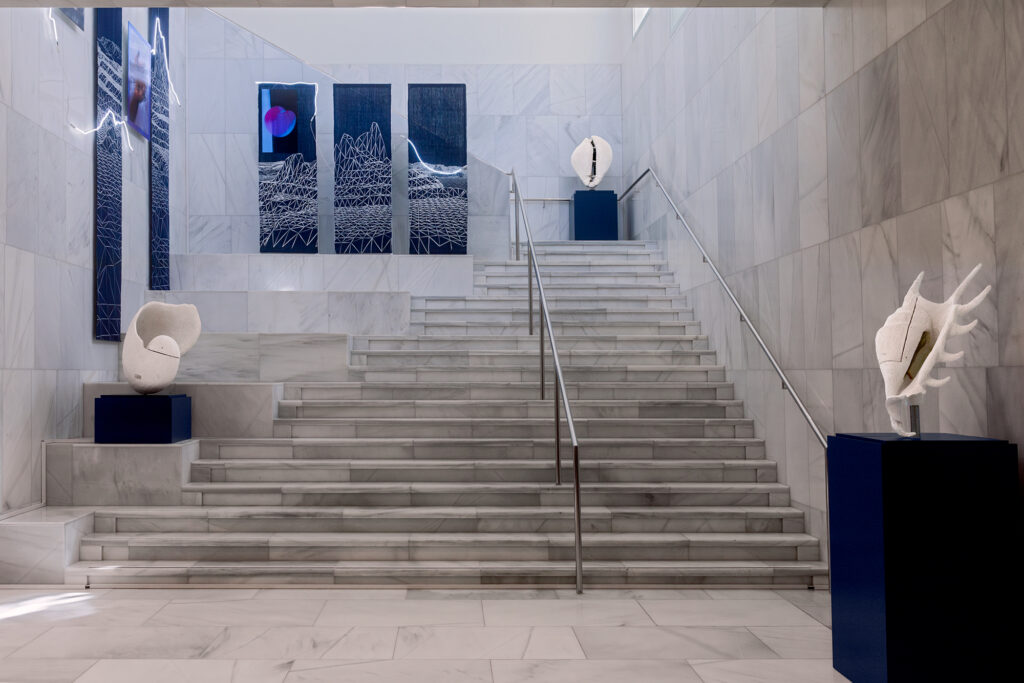
A marble museum foyer contains 3 shell-shaped acoustic sculptures composed of marble dust. Along the stairs indigo dyed prints are hanging.
A marble museum foyer contains 3 shell-shaped acoustic sculptures composed of marble dust. Along the stairs indigo dyed prints are hanging.
1,311 Diamonds (2026)
Installation View: “State of Wander: Towards Environmental Restoration,” Paleis Het Loo, Apeldoorn, NL April 16 – September 27, 2026
Curated by Anna Bitkina
Sculptural sound installation with silkscreen in marble dust on indigo-dyed nettle and jute, 3D-printed marble dust with electronics, lenticular pigment prints on aluminum, glass neon with activated carbon dioxide.
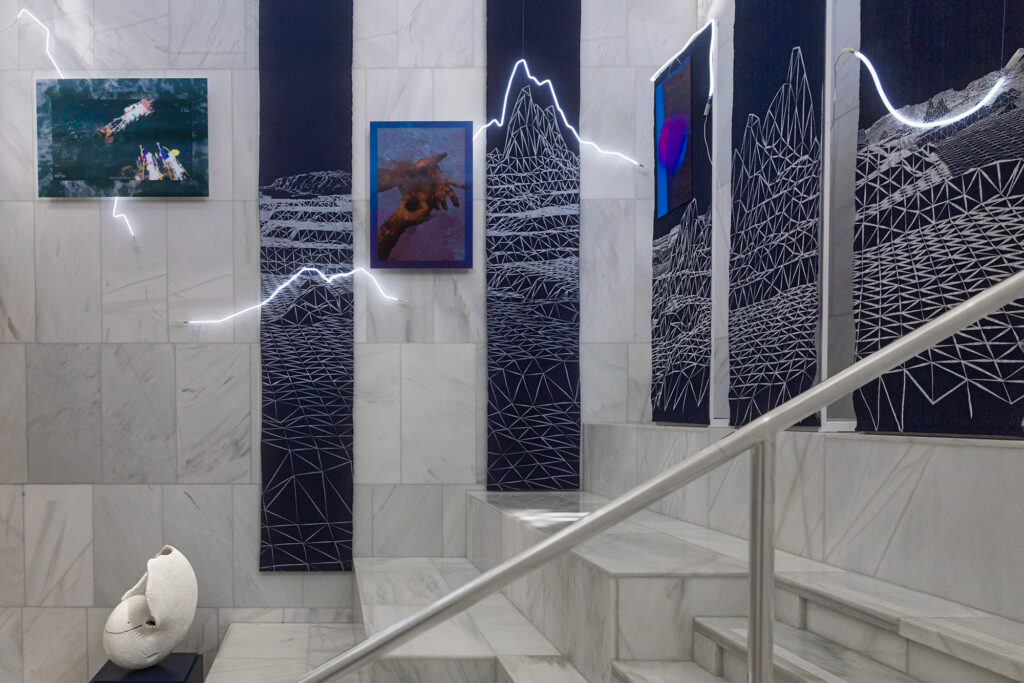
1,311 Diamonds connects the Dutch Royal Paleis Het Loo to the ocean. The palace’s marble—formed by marine organisms—reappears in shells and marble dust. Textiles depicting seafloor landscapes are dyed “royal” blue, evoking indigo’s history within the palace’s wealth and Dutch maritime trade that was entangled in systems of colonialism and slavery. The ocean is a place where extraction and memory meet—as well as a source of breath and connection.
1,311 Diamonds (2026)
Installation View: “State of Wander: Towards Environmental Restoration,” Paleis Het Loo, Apeldoorn, NL April 16 – September 27, 2026
Curated by Anna Bitkina
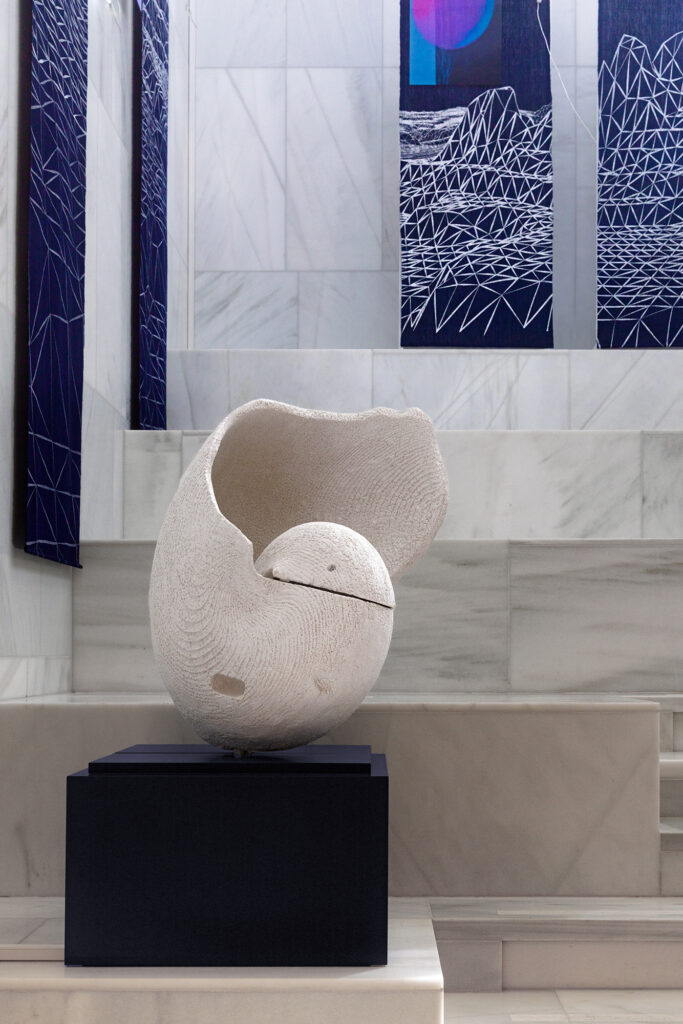
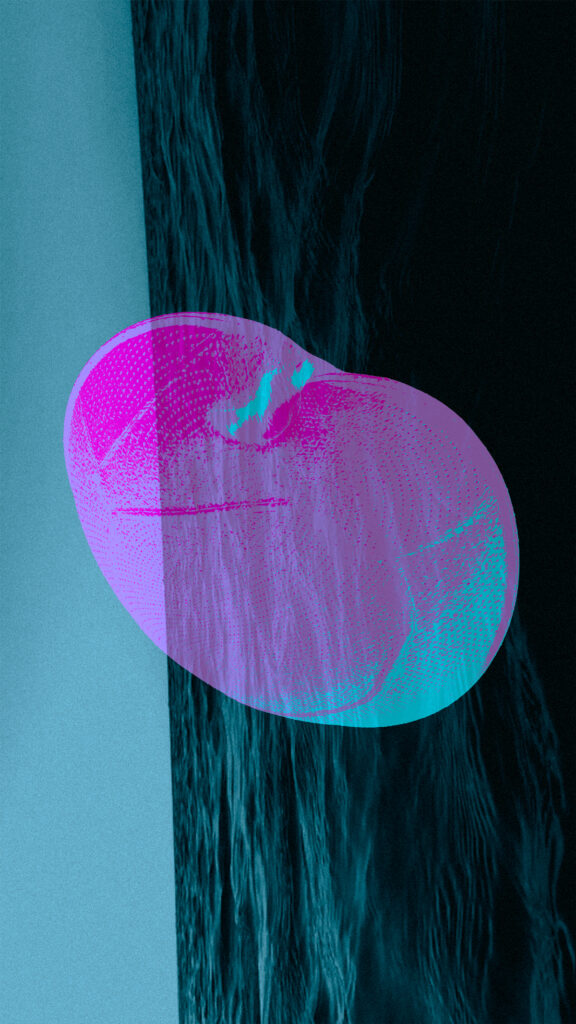
Detail, Nautlius Shell Speaker: 1,311 Diamonds (2026)
3D-printed marble dust with electronic speaker components, enlarged laser-scanned shell from a 17th c. Dutch VOC shipwreck held in the Rijksmuseum
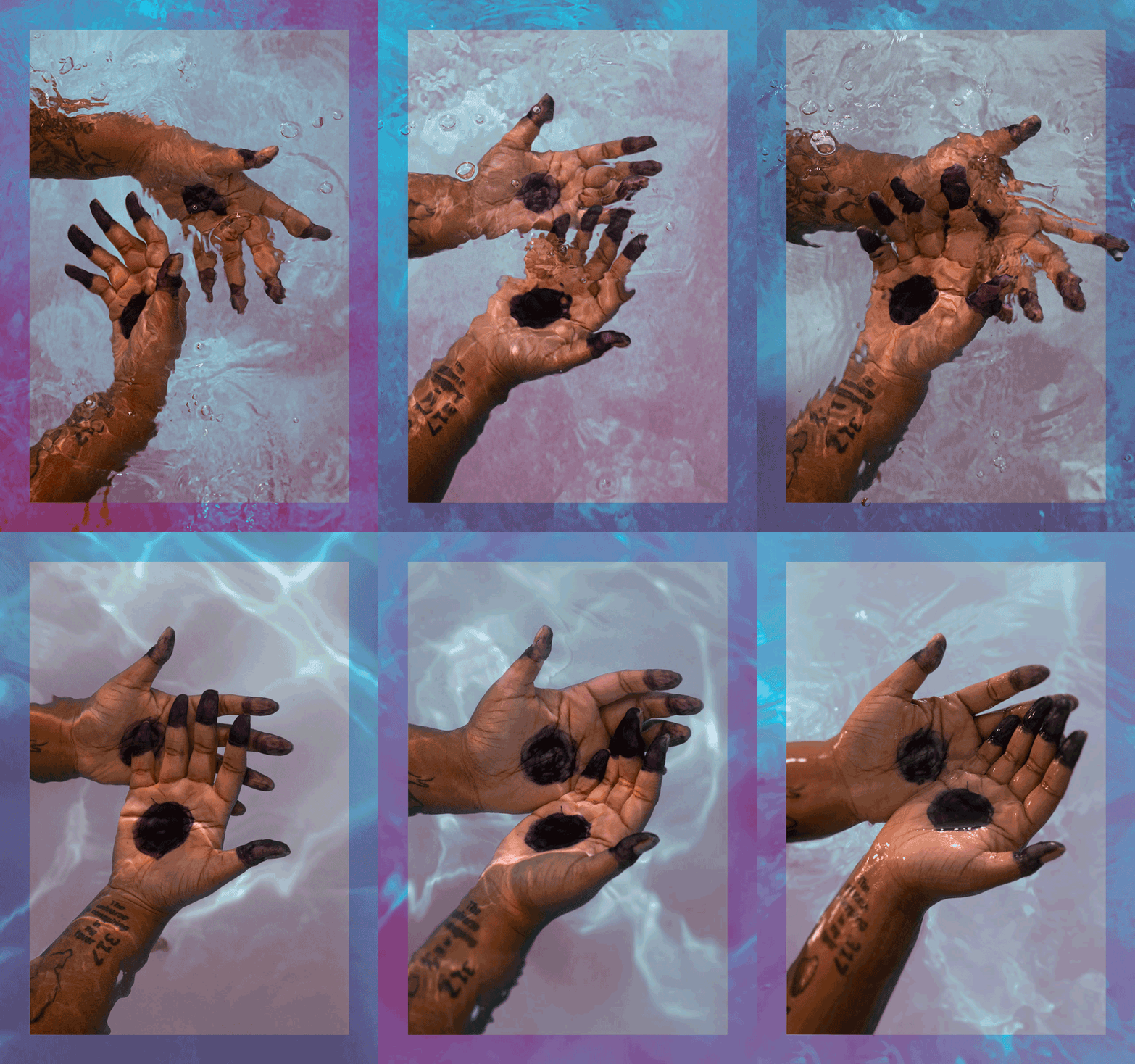
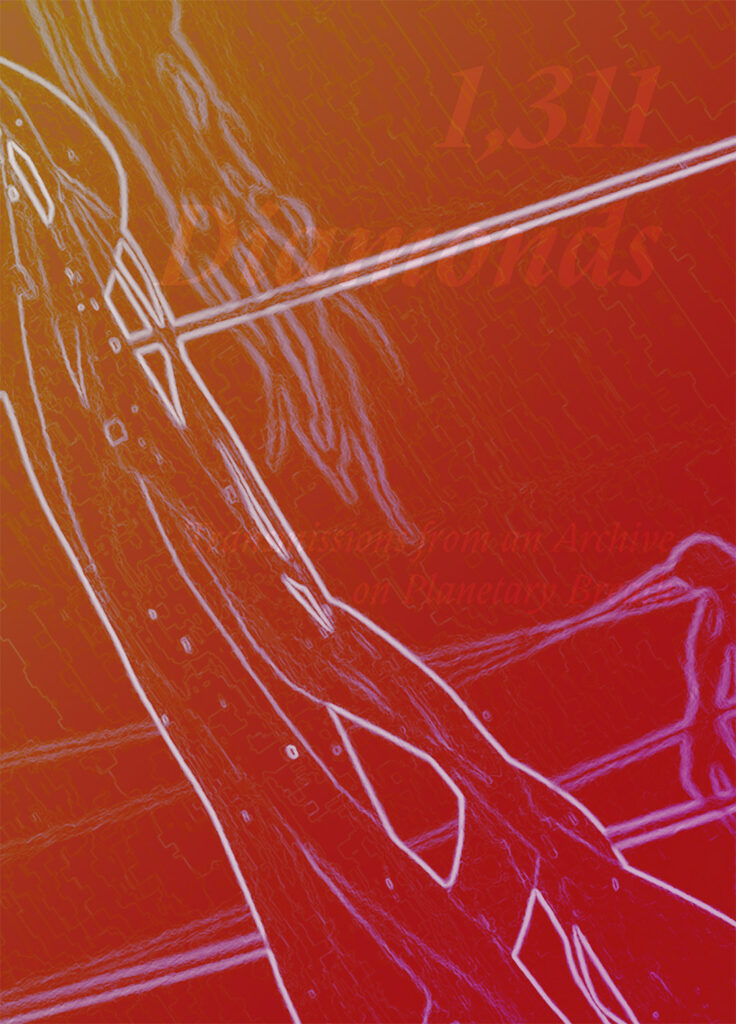
Simulated Detail: 1,311 Diamonds, Ahkia’s Indigo-Dyed Fingers (2026)
Lenticular pigment print on aluminum, 72 x 101 cm
Detail, Nautlius Shell Speaker: 1,311 Diamonds (2026)
3D-printed marble dust with electronic speaker components, enlarged laser-scanned shell from a 17th c. Dutch VOC shipwreck held in the Rijksmuseum
Simulated Detail: 1,311 Diamonds, Ahkia’s Indigo-Dyed Fingers (2026)
Lenticular pigment print on aluminum, 72 x 101 cm
Berrigan combines material metaphors, practices of repair and reparations, the history of Paleis Het Loo and its links to maritime commerce and the transatlantic slave trade—a source of systemic racism and trauma that still affects the descendants of enslaved and colonized people. Created at a time of climate crisis and social reckoning, the work highlights submerged oceanic histories that continue to shape both the palace and our unequal relationships to nature.
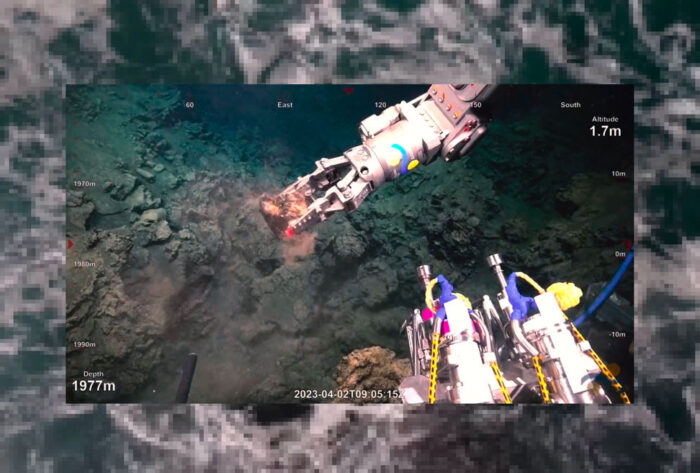
The ocean appears across several artistic forms. The palace’s interiors originate in marine life: marble contains the shells of microscopic sea creatures, who transform CO2 into calcium carbonate (limestone) and contribute to regulating the Earth’s atmosphere. Indigo-dyed textiles evoke aquatic depth and a link between the royal family’s wealth to slavery. Indigo plant dye was a lucrative commodity for the Dutch East India Company (VOC), whose trade was tied to systemic violence and forced labor of Indigenous people in Asia. As the first corporation, the VOC laid the foundation for modern global networks through maritime trade, slavery and exploitation. The installation’s textiles are silkscreened with marble dust depicting a volcanic seafloor that lies along shipping paths of transatlantic slavery, navigated by the Dutch West India Company and other European powers. This ocean bed is where the remains of African ancestors—thrown or escaped overboard in captivity—converge with the seashells to transform CO2 into marble and sustain planetary respiration.
Shell-shaped speakers connect the artwork’s central themes. Recovered from the 17th-century shipwreck of the VOC’s Witte Leeuw and held in the Rijksmuseum, the shells are enlarged and 3D-printed into marble dust salvaged from industrial waste. The shells resound with a composition featuring breathing practices from a reparative swim school led by and for Black, Indigenous, and people of color. Among the legacies of slavery and segregation impacting people of color can be structural barriers to learn how to swim and a fear of water whose origin of intergenerational trauma embodies a rupture within a fundamental human relationship to nature’s elemental existence. The artwork evokes environmental restoration as part of material reparations and transformative justice for our shared, inherited history of colonization, whose consequences and responsibilities remain unequal.
Historic accounts of the Witte Leeuw list within its cargo 1,311 diamonds—brilliant concentrations of carbon easily transformed into money. Never found, the diamonds are likely still held by the ocean, a nexus of extraction, violence, and memory—as well as a source of life, breath, and connection.
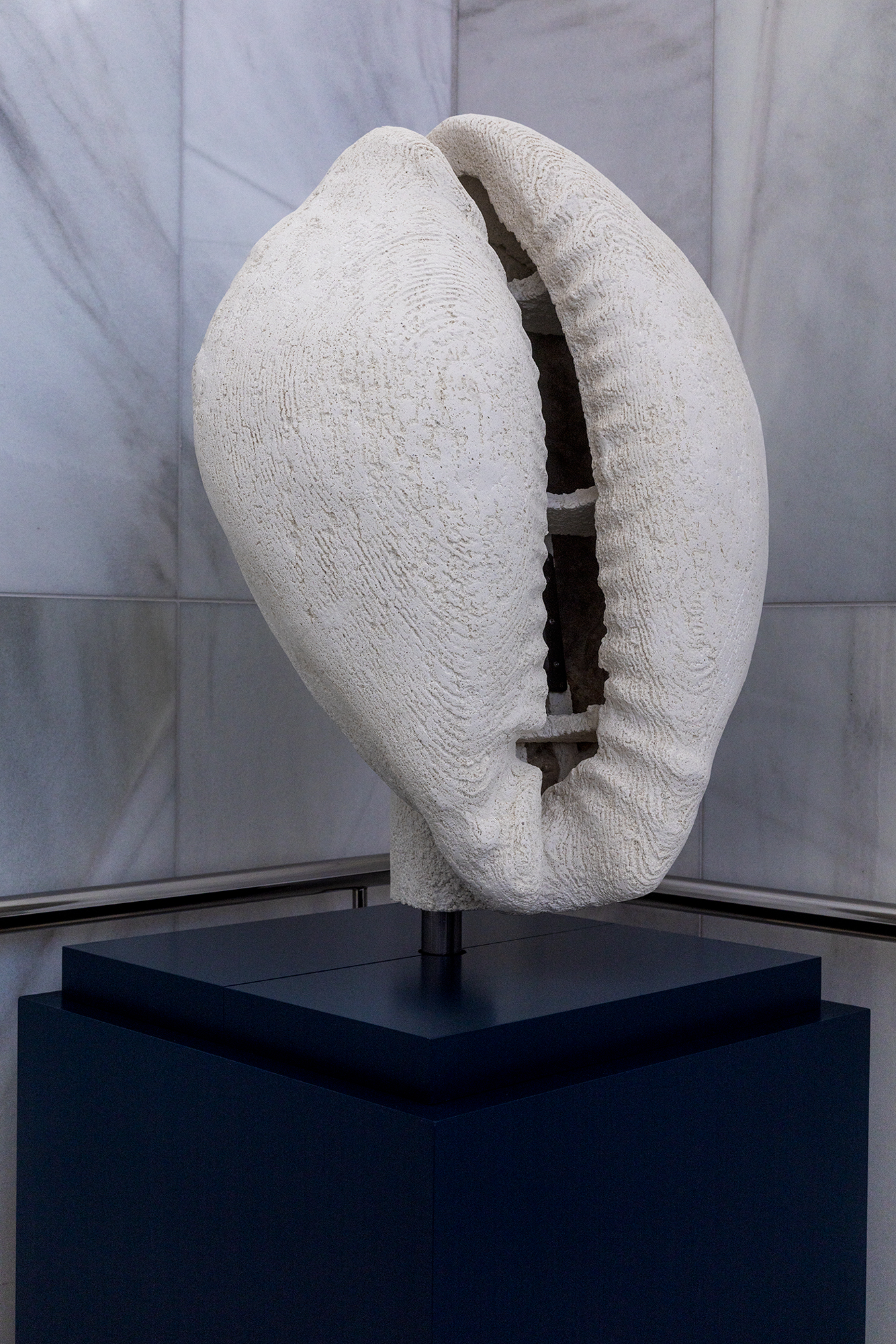
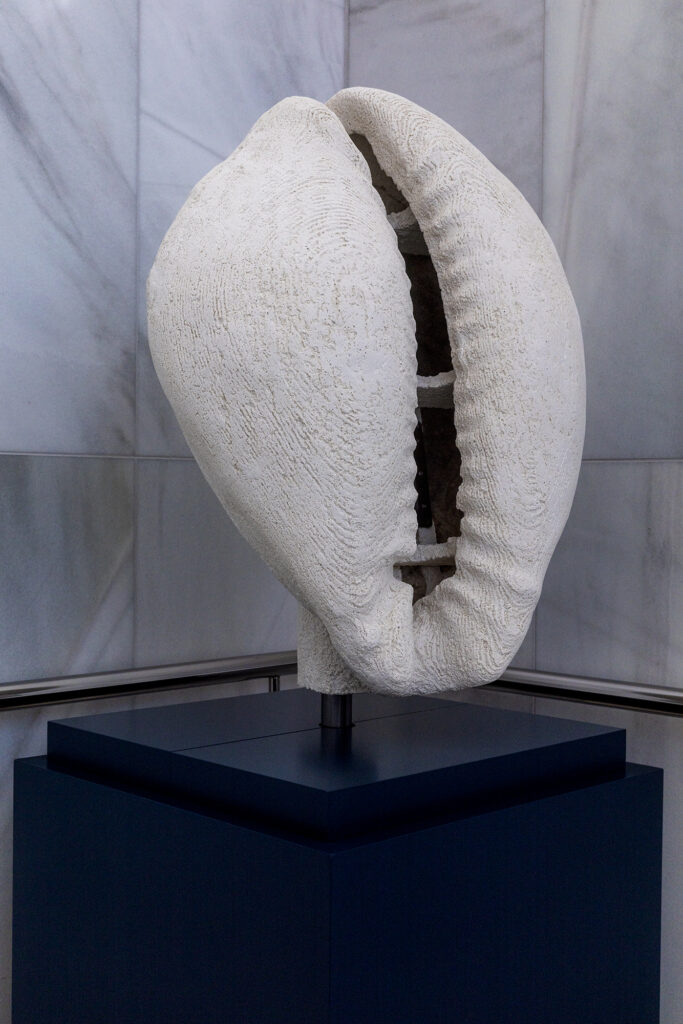
Detail, Cowry Shell Speaker: 1,311 Diamonds (2026)
3D-printed marble dust with electronic speaker components, enlarged laser-scanned shell from a 17th c. Dutch VOC shipwreck held in the Rijksmuseum
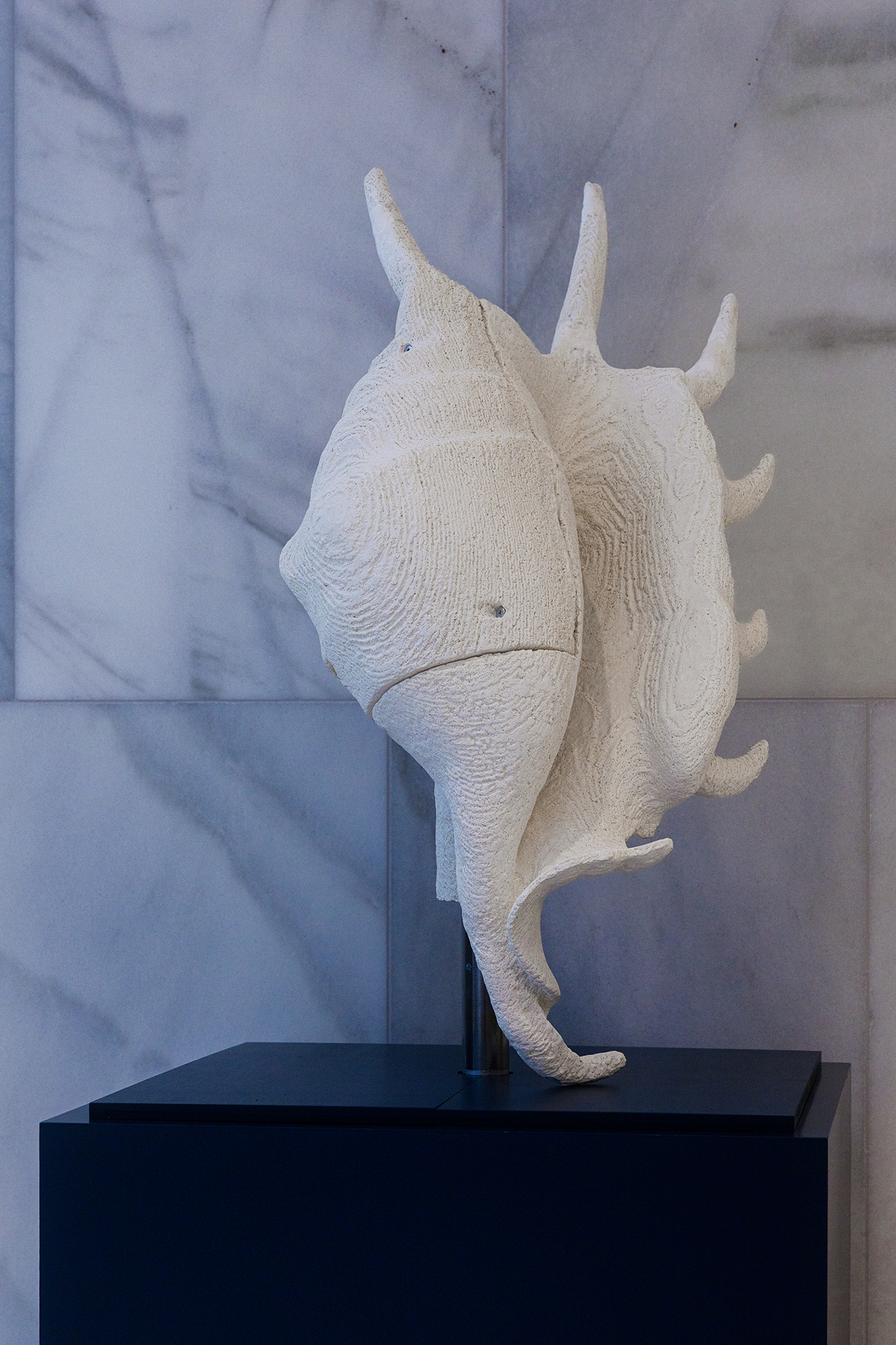
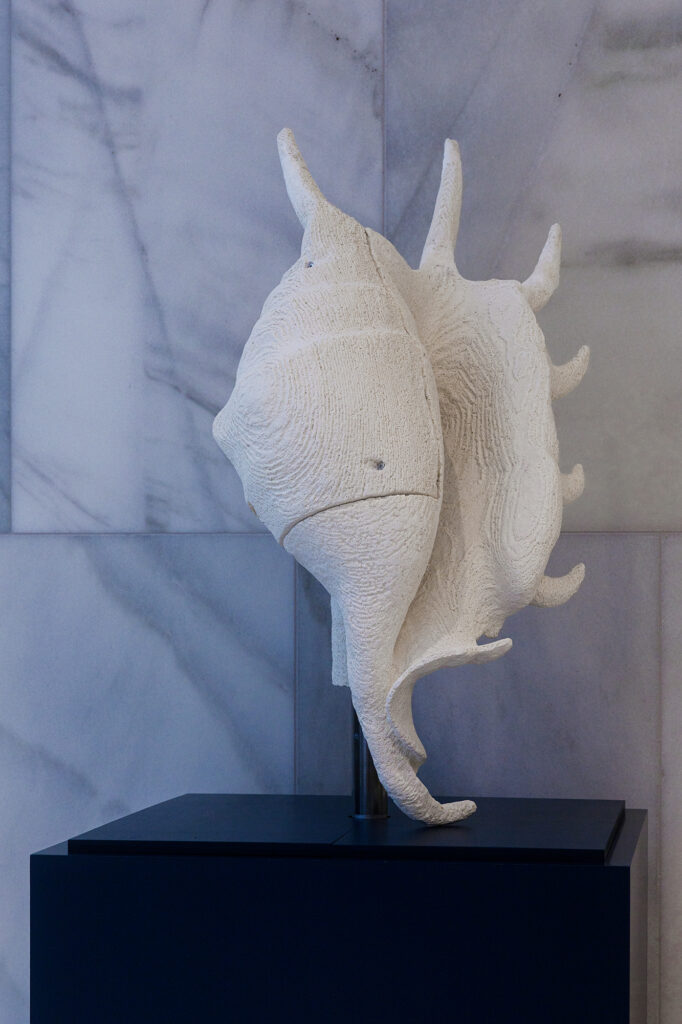
Detail, Lambis Shell Speaker: 1,311 Diamonds (2026)
3D-printed marble dust with electronic speaker components, enlarged laser-scanned shell from a 17th c. Dutch VOC shipwreck held in the Rijksmuseum
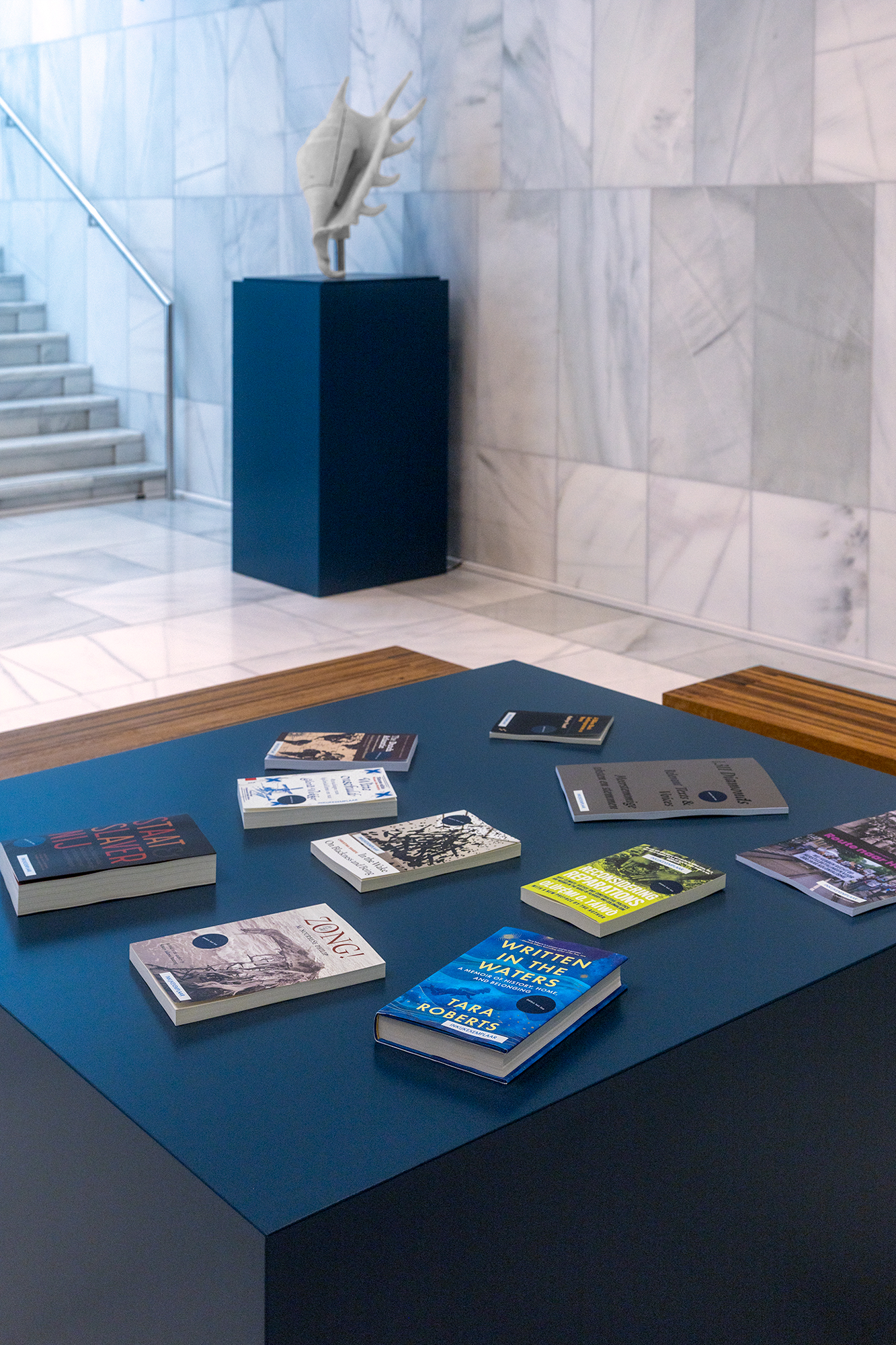
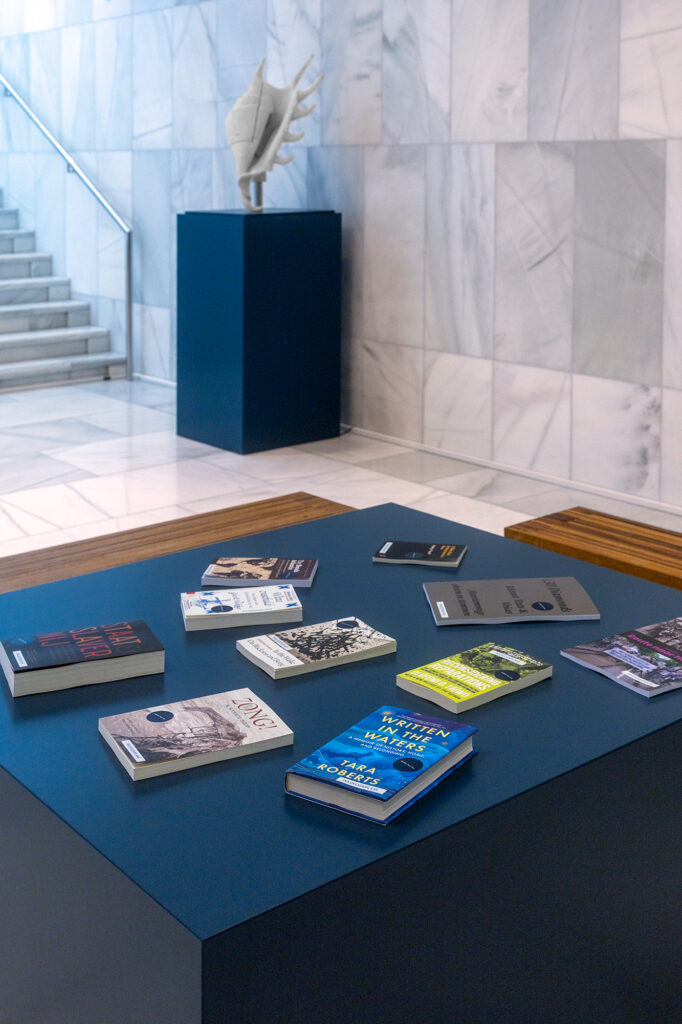
Detail, Reflection Table: 1,311 Diamonds (2026)
Detail, Reflection Table: 1,311 Diamonds (2026)
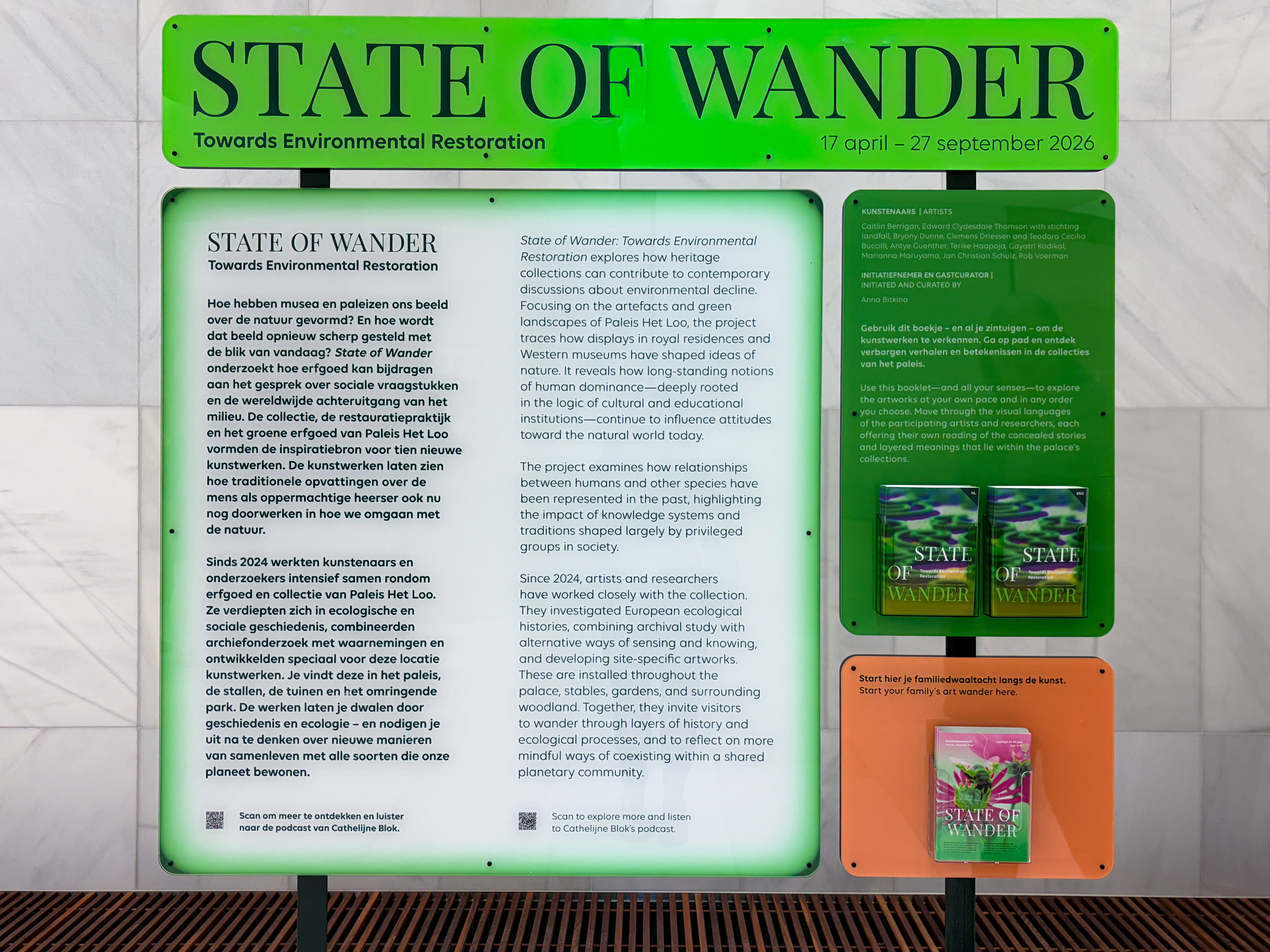
“State of Wander: Towards Environmental Restoration,” Paleis Het Loo, Apeldoorn, NL April 16 – September 27, 2026
Curated by Anna Bitkina
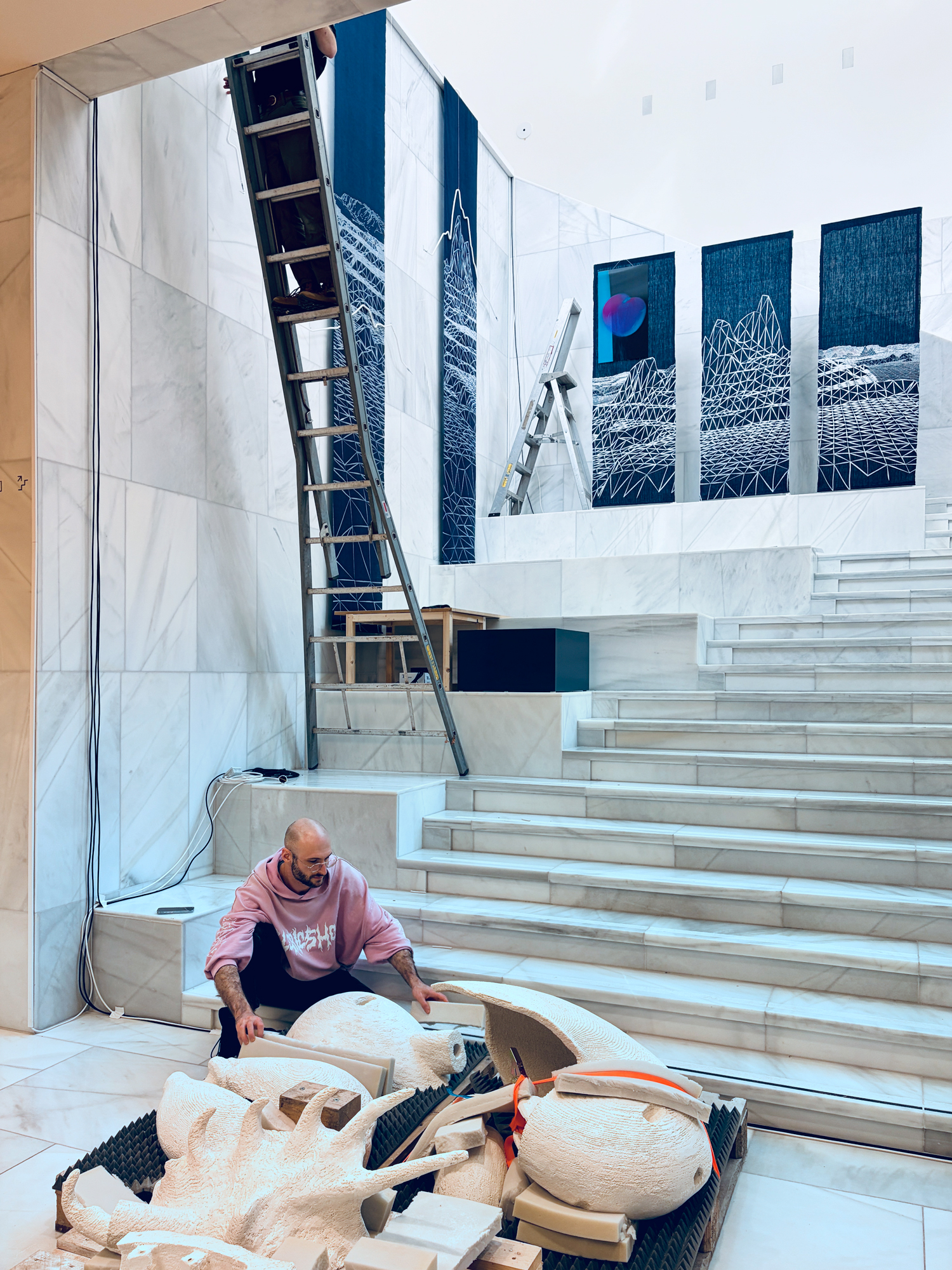
1,311 Diamonds (2026)
Installation Proces: “State of Wander: Towards Environmental Restoration,” Paleis Het Loo, Apeldoorn, NL April 16 – September 27, 2026
Curated by Anna Bitkina
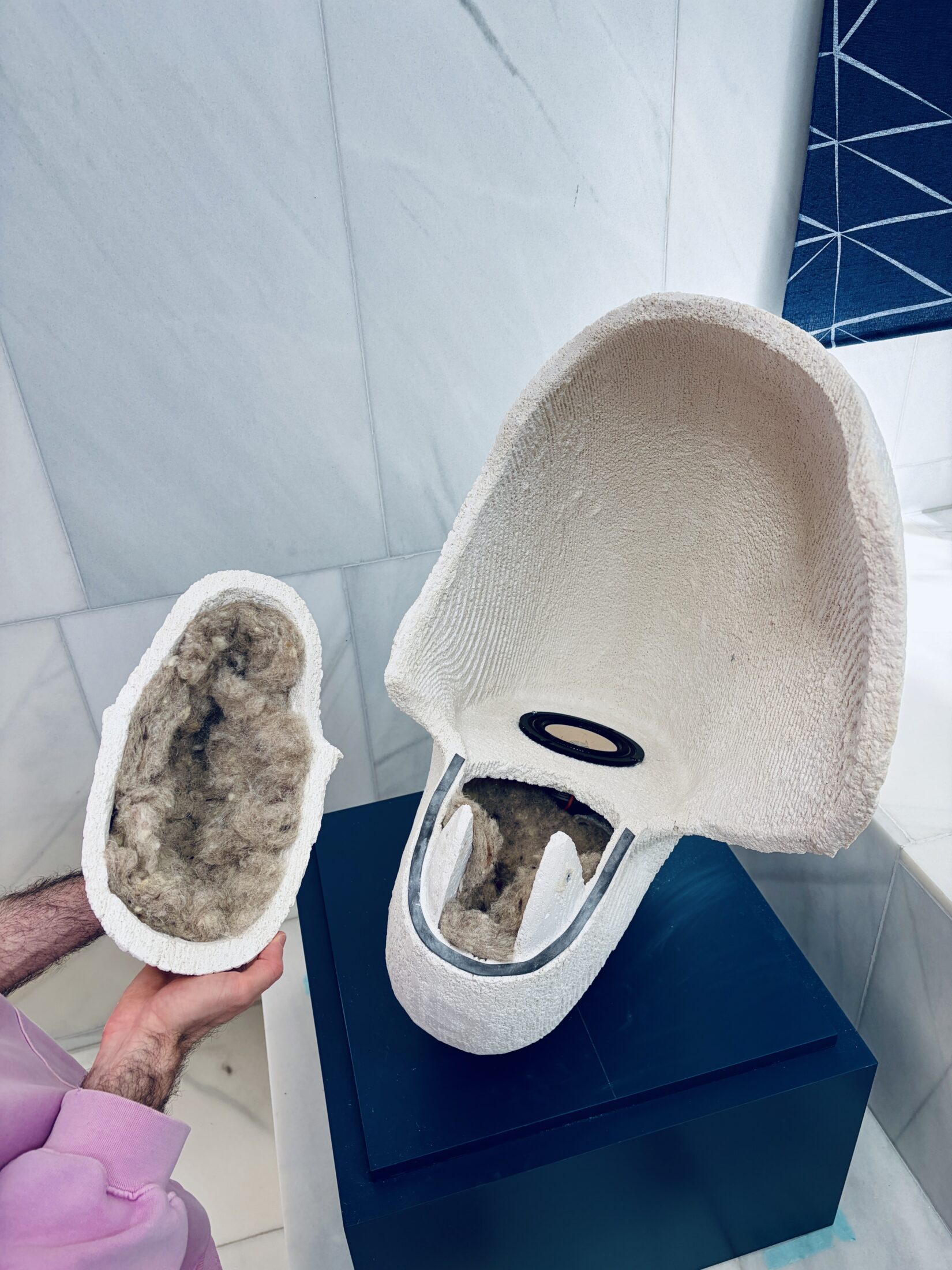
Detail, Nautlius Shell Speaker: 1,311 Diamonds (2026)
3D-printed marble dust with electronic speaker components, enlarged laser-scanned shell from a 17th c. Dutch VOC shipwreck held in the Rijksmuseum
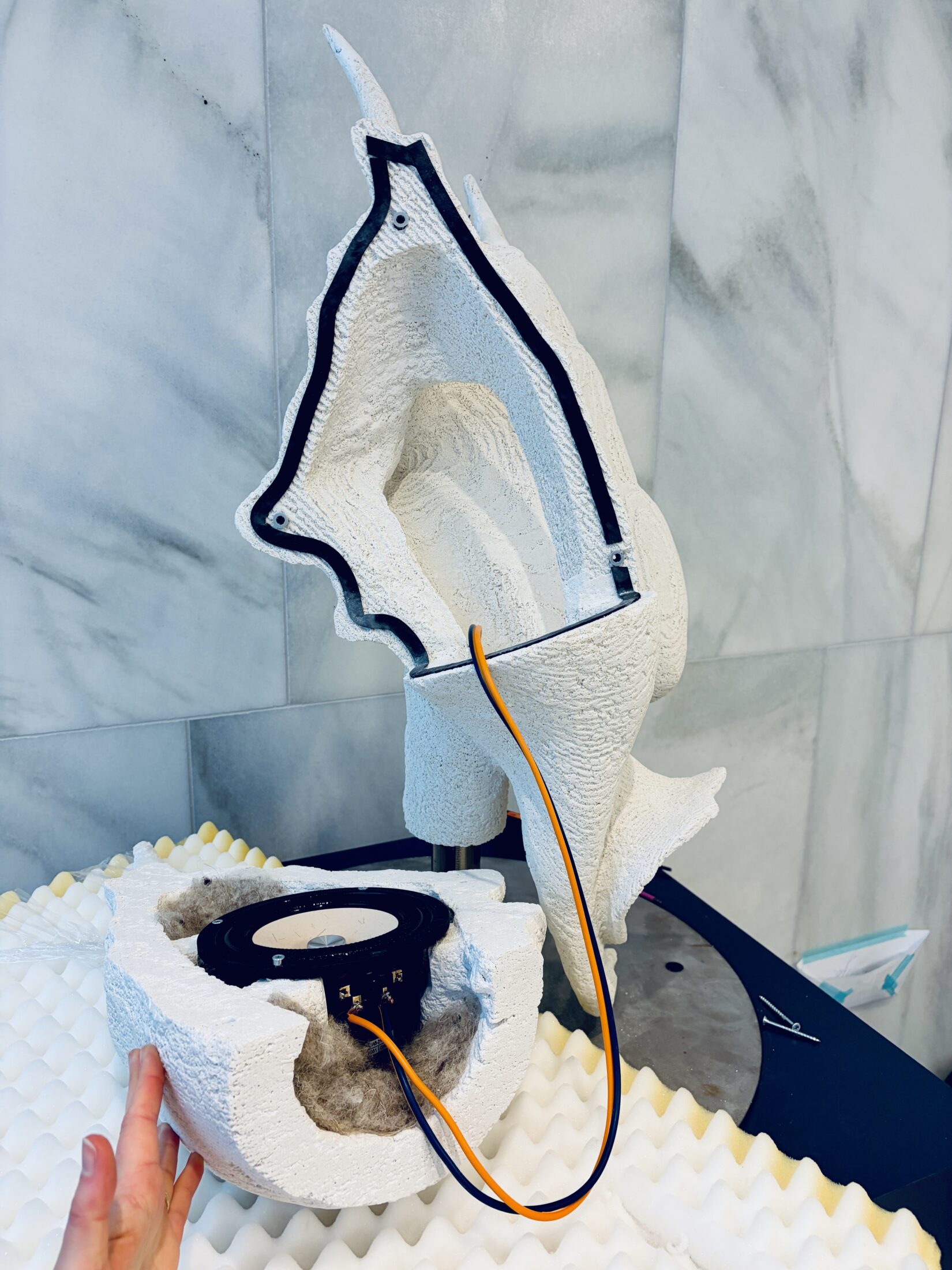
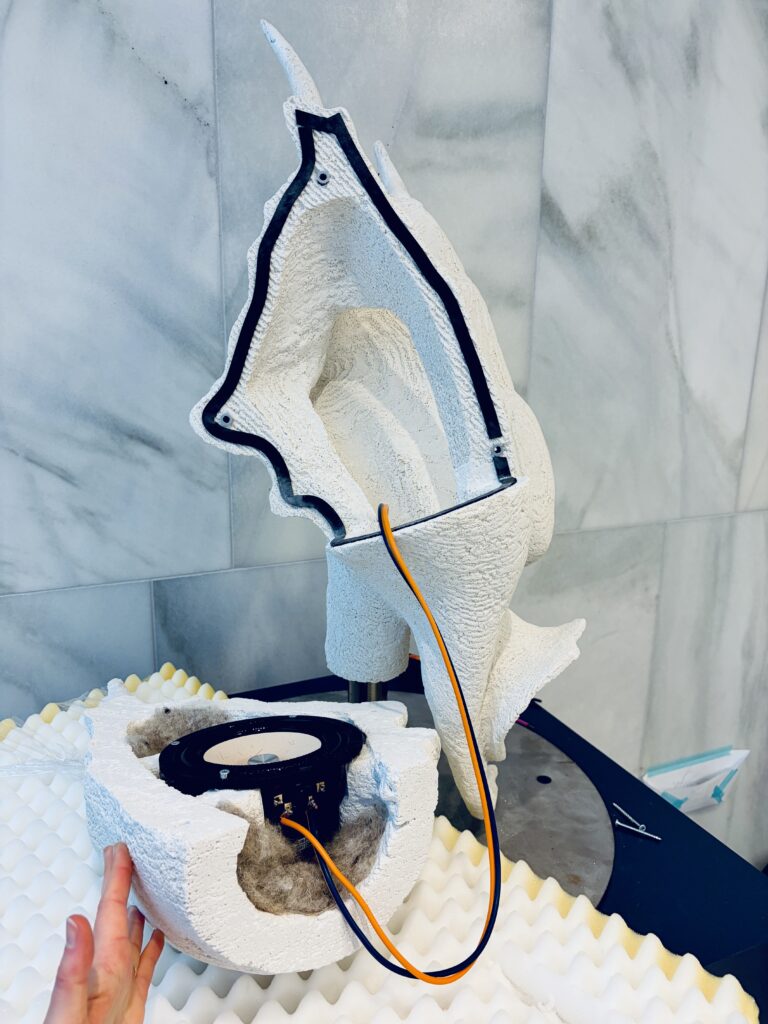
Detail, Lambis Shell Speaker: 1,311 Diamonds (2026)
3D-printed marble dust with electronic speaker components, enlarged laser-scanned shell from a 17th c. Dutch VOC shipwreck held in the Rijksmuseum
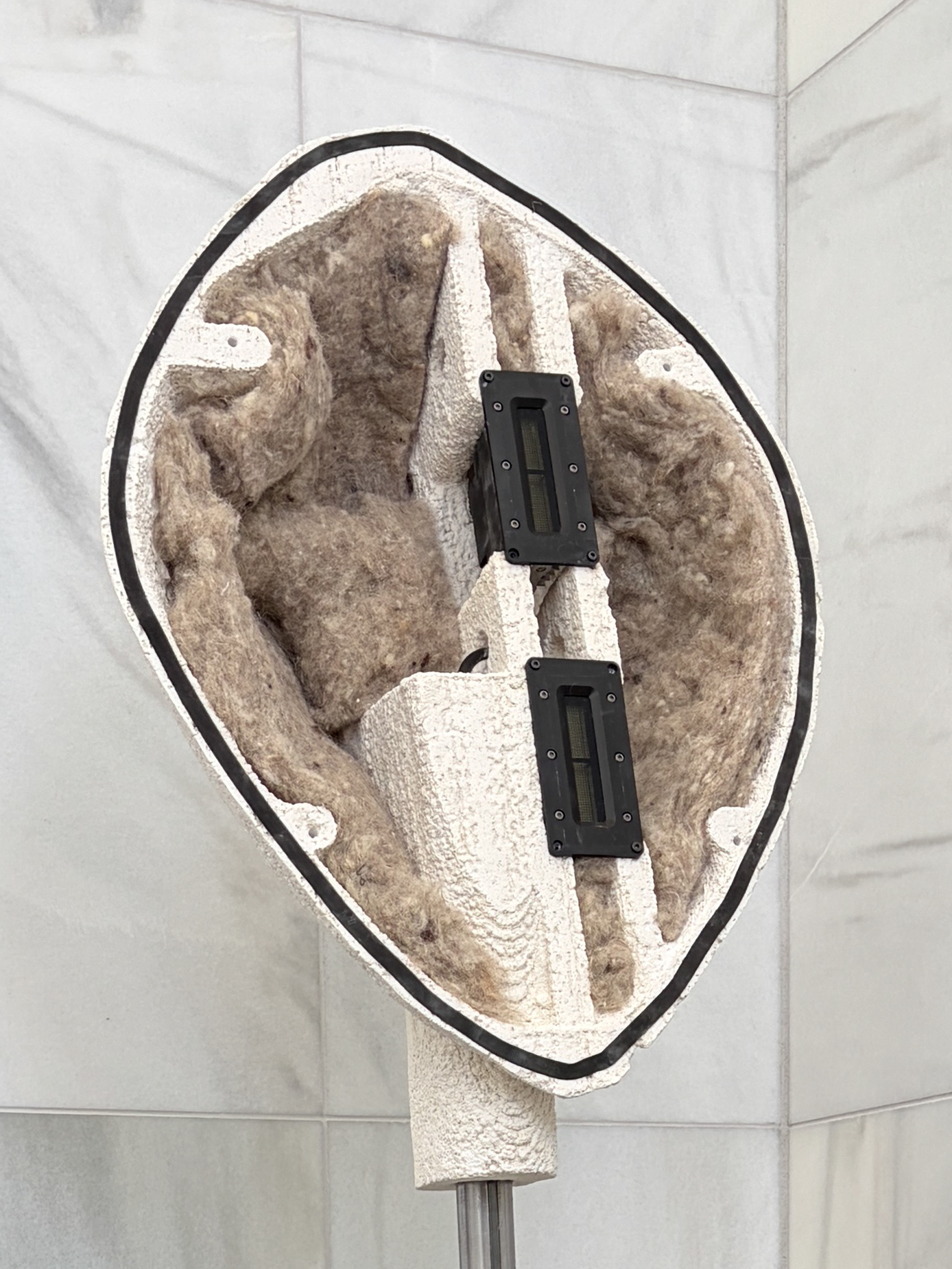
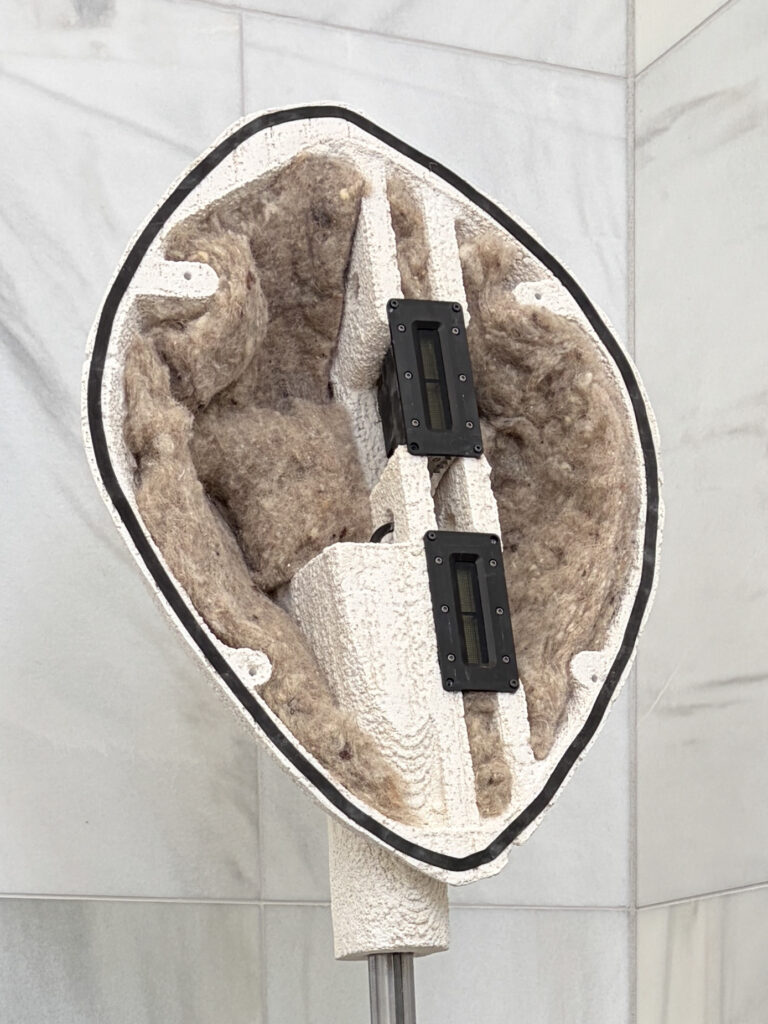
Detail, Cowry Shell Speaker: 1,311 Diamonds (2026)
3D-printed marble dust with electronic speaker components, enlarged laser-scanned shell from a 17th c. Dutch VOC shipwreck held in the Rijksmuseum
Collaborative Contributions
Chandrika Francis
is founder and facilitator of the Oshun Swim School. Chandrika is dedicated to supporting people of color to have a relationship to the earth grounded in remembrance, safety, connection, healing, and liberation! Before founding OSS in 2018, Chandrika supported youth of color to reconnect with the earth for seven years in the form of environmental education, backpacking trips, camping trips, conservation work, classroom teaching, and youth development. She has a Masters in Education through the Islandwood Program at the University of Washington, with a focus in decolonizing environmental education. She is a bi-coastal baby at heart, having spent her life between Oakland, Seattle, and the East Coast, and is excited to bring her work to the lands she loves.
Samuel Hertz
is a composer and researcher working with sound-sensing networks of environmental science research, whose works span electronic music, interstellar radio transmissions, deep sea broadcasts, and doom metal concerts. His work has been exhibited and performed in the Ars Electronica Festival (AT), Palais de Tokyo (FR), Mudam Luxembourg (LU), Haus der Kunst (DE), Akademie der Künste (DE), Pioneer Works/Wave Farm (US), the Onassis Foundation (GR), Amant (US), Kunstmuseum Bonn (DE), National Science + Media Museum (UK), and the International Space Station, among others. Hertz is a graduate of Mills College Center for Contemporary Music, where he studied composition with Pauline Oliveros, Maggi Payne, Zeena Parkins, Fred Frith and Roscoe Mitchell. He is currently an AHRC/Techne-funded PhD candidate at the Royal Holloway University of London Centre for GeoHumanities, researching sound-sensing networks within bioacoustic conservation and politics of acoustic sensing.
Pietro Odaglia
is a postdoctoral researcher in digital fabrication at ETH Zurich working on robotic manufacturing processes for mineral construction materials. His research investigates how additive manufacturing can transform granular mineral resources into architectural components. He founded the 3D Stone Printing Lab, where a large-scale binder-jetting platform was developed as an open research instrument for studying fabrication processes, material systems, and architectural applications at building scale. The system enables experimentation with heterogeneous mineral materials, including quarry fines and stone waste, allowing these resources to be transformed into stone-like components through automated fabrication. His work spans machine design, material research, and computational design. Through experimental prototypes and architectural installations, he explores how robotic fabrication can generate new material expressions and construction logics while enabling more circular approaches to mineral construction. His research examines how digital fabrication technologies may reshape the relationship between architecture, material resources, and construction processes, investigating how automated production can reconnect architectural design with the geological origins of building materials.
Special Thanks
to all of the credited collaborators, artists and contributors, as well as Anna Bitkina, Annette De Vries, Marijntje Knapen, Edwin Blankhorst, Yip Stals, Ferdi Maks, Nicole Immler & Dialogics of Justice, The Black Archives Amsterdam, Kel O’Neill, Luke Cohlen, Nina Bozicnik, Luke Du Bois, Folker Silge & ARTX Design, Water Babies Seattle, Sygns Neon, Appleoak Fibre Works, and the Rijksmuseum.
Credits
-
Collaborative Participation: The Oshun Swim School led by Chandrika Francis
-
Swimmers: Winona Hollins Hauge, Ahkia-Rayne, and Leah
-
Structural remodeling and 3D printing of shells: Pietro Odaglia, Design Building Technologies, ETH Zurich
-
Sound design, composition, and speaker engineering: Samuel Hertz
-
Screenprinting : Talya Lubinsky
-
Spatial data processing: Martyna Marciniak
-
Translation into the Dutch: Luke Cohlen
-
Automatic Underwater Vehicle seafloor mapping: Mid-Atlantic Ridge Puy des Folles Seamount, chief scientist David Butterfield with Schmidt Ocean Institute, United States National Oceanic and Atmospheric Administration Research, and other partners (2023)
-
Commissioned by: Paleis Het Loo Museum for "State of Wander: Towards Environmental Restoration" 16 April - 27 September 2026
-
Guest Curator: Anna Bitkina
-
Supported by: Mondriaan Fonds, het Cultuurfonds, FWF Austrian Science Fund, ETH Zurich, Design Building Technologies, Mudam Luxembourg, Neun Kelche Berlin, NYU Integrated Digital Media, Radio Amnion for Haus der Kunst Munich